
Structured, evidence-informed care for Borderline Personality Disorder patterns, bipolar-related instability, trauma after stabilization, overcontrol, adolescents and families, and other high-impact emotion and behaviour patterns.
You do not need to diagnose yourself or choose between twelve programs. The intake clarifies the pattern, current risk, medical needs, goals, and most proportionate level of support.
You do not need a confirmed diagnosis before asking whether DBT may fit the pattern.
DBT combines acceptance and change. We validate why the response makes sense, identify the behavioural chain that keeps repeating, and train concrete skills until a different choice becomes more available under pressure.
Each pathway answers a different clinical question. Intake helps determine which amount and format of support fits now.
When the full model is indicated, individual therapy, skills training, between-session coaching, and therapist consultation work as one treatment system rather than separate services.
DBT is not strengthened by adding more material indiscriminately. The clinic selects communication, tracking, learning, and practice tools only when they have a clear treatment purpose and can be reviewed together.
When messaging is part of the treatment plan, it can help clients share assigned work, clarify practice, and reconnect the next appointment to what happened in daily life.
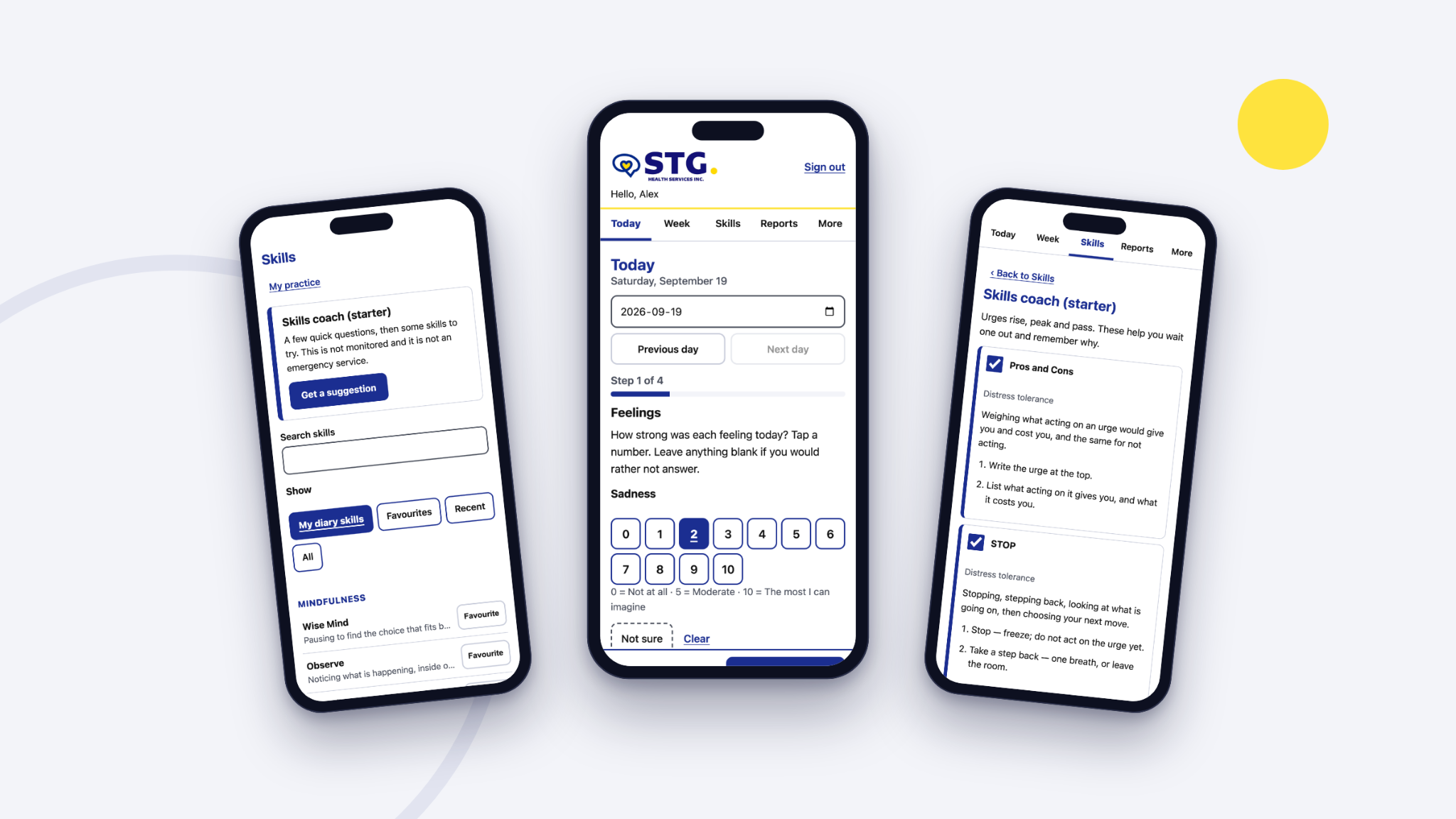
Selected clients receive structured learning materials, worksheets, reminders, and program resources through the STG Online Clinic rather than relying on memory alone.
The modules work together. Mindfulness notices the moment; distress tolerance prevents escalation; emotion regulation changes vulnerability; interpersonal effectiveness protects relationships and self-respect.
You do not need to know the diagnosis, program, or clinician before reaching out.
DBT Saskatchewan is part of STG Health Services Inc. Care is grounded in validation, behavioural precision, practical skills, and respect for the person behind the pattern.
CEO · Clinical Counsellor / Psychotherapist
Associate · Registered Doctoral Psychologist
Associate · Mental Health Therapist
All sessions are private-pay. Reimbursement depends on the individual benefit plan. NIHB and Métis Nation–Saskatchewan funding may be available after approval for eligible clients.
Browse evidence-informed articles and guides by skill, presenting concern, and treatment pathway.
No. Intake considers the behavioural pattern, risk, functioning, goals, treatment history, and whether DBT is clinically appropriate.
No. DBT Saskatchewan offers individual therapy, skills groups, guided pathways, comprehensive DBT, and specialized programs.
DBT can support routines, distress tolerance, relationships, and behaviour alongside appropriate medical assessment and treatment.
DBT Saskatchewan is not an emergency service. Immediate danger requires 911 or the nearest emergency department; HealthLine 811 and 988 are additional crisis resources.
Yes. Core pathways are designed for secure virtual access across Saskatchewan when clinically appropriate.
You do not need to decide alone. The secure intake is reviewed by a clinician who recommends a proportionate starting point.
The intake gives the clinic enough information to recommend a proportionate next step.