









DBT Next Steps Group: When You’re Stable, But Still Stuck
Learn how DBT Next Steps helps DBT graduates move from stable-but-stuck to self-sufficient. Reduce avoidance, build routines, strengthen relationships, and create meaningful progress.
You don’t need more willpower.
You need a better operating system for intense emotions.
Because when your nervous system is on fire…
the “calm-moment plan” disappears.
That’s why DBT works so well for BPD—and why DBT skills can be a powerful support alongside medical treatment for bipolar patterns:
If you’ve been carrying this alone—trying to be “strong,” trying not to be “too much,” trying to hold it together—
let this be the moment you choose something different.
Not perfection.
Not instant transformation.
Just a steady, skillful path forward.
Because you deserve a life that feels calmer, safer, and more workable.
About STG Health Services Inc.
DBT Saskatchewan is part of STG Health Services Inc. and is led by Dr. Mike White and Dr. Chris de Feijter—person-centred clinicians offering DBT support with warmth, structure, and respect.
We work with people who experience emotional dysregulation, harmful or high-risk coping patterns, and painful interpersonal cycles—and who want real change that holds up in real life.
Intake & Plan
Intervention PlanDBT Intensive
Individual SessionsDBT Skills
Foundations - GroupSupports
Secure MessagingKnowledge
Continued LearningIf you’ve been stuck in the same cycle—intensity → fallout → guilt → repeat—this is the clean first step.
In an online intake, we map what’s happening (BPD traits, bipolar patterns, emotion dysregulation, relationship instability, impulsive coping), what’s been tried, and what level of structure will actually hold.
You’ll leave with a clear recommendation:
DBT Intensive model (individual + skills)
skills training emphasis
individual-only support
or a different starting point if that’s safer/better
This is for people who need more than insight—they need a plan for the exact moments they derail.
In individual DBT, we work on:
the triggers that set off spirals
the patterns that keep repeating
the “after” (repair, shame, self-criticism, relationship damage control)
building specific skills for your real situations
It’s structured, skills-driven therapy—so you’re not just talking about change. You’re rehearsing it.
The reason most people don’t change isn’t lack of motivation—it’s lack of repetition under stress.
Weekly DBT skills training gives you that repetition. You’ll learn and practice the core DBT skill sets:
Mindfulness (catch it early)
Distress Tolerance (survive the moment without making it worse)
Emotion Regulation (turn down the intensity over time)
Interpersonal Effectiveness (less conflict, more clarity, more repair)
This is where “knowing” becomes “doing.”
Real life doesn’t wait for your next appointment.
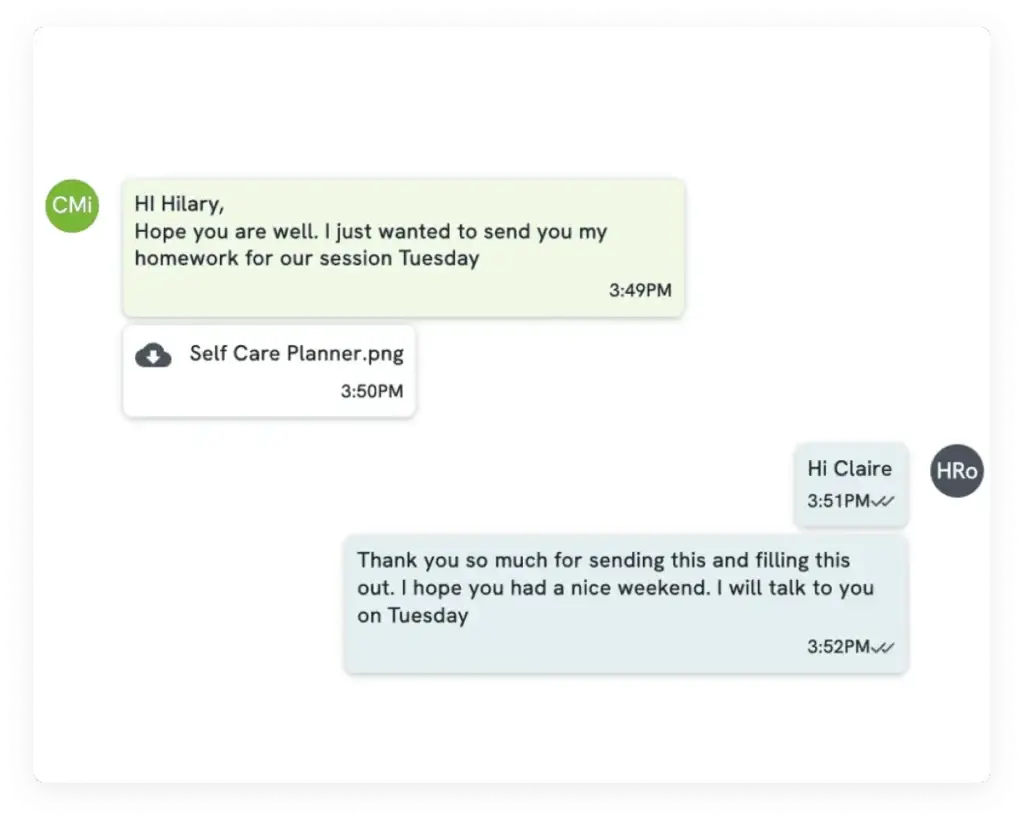
Between-session support helps you bridge the gap when intensity spikes, conflict happens, or urges show up.
With secure messaging and structured check-ins (like diary cards/journaling), you get:
faster course-correction
accountability without shame
better pattern tracking (so we treat causes, not symptoms)
more carryover into daily life
It’s the difference between “I’ll try next time” and “I handled it differently today.”
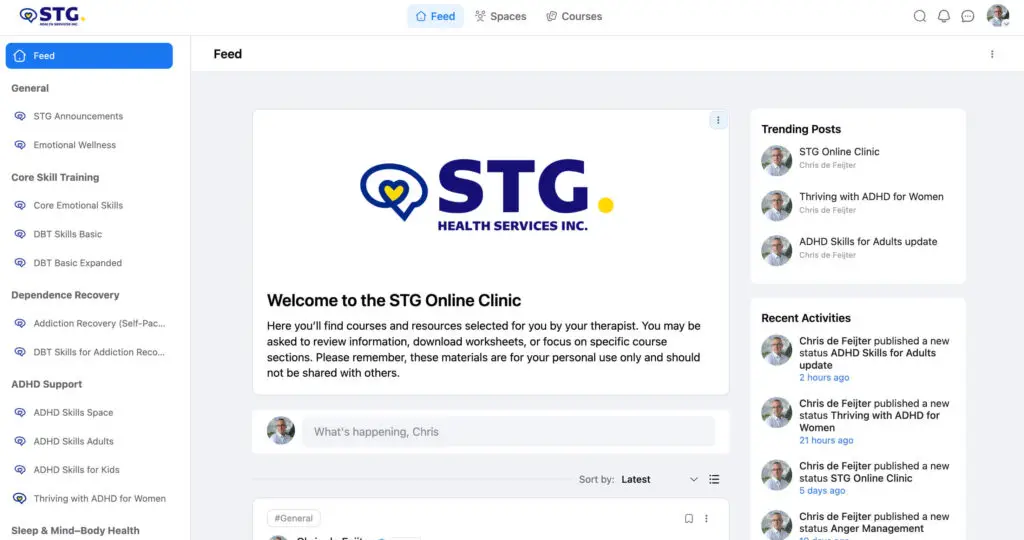
Stay engaged in your growth with our Secure Learning System—created to support you between sessions. No need to worry about forgetting key details; you can revisit important concepts and build on your mental health journey through structured online psychoeducation.
Strategies you can rely on
Explore and practice evidence-based tools designed to help you make steady progress.
Fresh content every week
The STG Online Clinic is updated regularly, giving you new strategies and resources to strengthen your toolbox.
Continuity, structure, and a plan you can follow.
You don’t rise to the level of intention—you fall to the level of your skills. We build the toolbox that holds up under pressure.
Support reduces shame and increases repetition—two things most people are missing when they try to change alone.
No. Start with intake if you’re struggling with BPD traits, bipolar instability, or intense emotions that create fallout.
No. DBT was originally developed for severe emotion dysregulation and is strongly associated with BPD treatment, but many people benefit even without a BPD diagnosis—especially if emotions, impulses, or relationship conflict are driving suffering.
DBT doesn’t replace medical care for bipolar disorder, but DBT skills can be very helpful alongside it—especially for:
emotion regulation during mood shifts
distress tolerance when urges spike
interpersonal effectiveness when relationships get strained
mindfulness to notice early warning signs
staying anchored to routines that protect mood stability
DBT Skills Group is structured learning + practice of skills (like a class with coaching).
DBT Counselling/Individual DBT focuses on applying those skills to your personal patterns, triggers, and life situations week to week.
Yes. You don’t need to “know your label” to start. Intake focuses on your patterns (emotion intensity, impulsive coping, relationship cycles, mood swings, safety concerns) and we recommend the best-fit pathway.
You’ll complete an initial consultation to understand what you’re dealing with, what’s keeping the cycle going, and what level of structure/support fits best (group, individual, guided self-help, or a combination). You’ll leave with a clear next step.
Yes—services are delivered virtually and designed to be accessible across Saskatchewan.
Most people notice early wins when they start using a small number of skills consistently (often within weeks). Deeper change—especially for long-standing patterns—typically requires repetition over months. The key variable isn’t “insight,” it’s skills practice + support when you slip.
DBT is commonly used for high-risk coping patterns, but the right level of support matters. If you are at imminent risk, use emergency supports immediately (911 / local emergency / crisis line).
In intake, we’ll clarify what supports are in place and what treatment intensity is appropriate.
Yes. DBT is not only for “big emotions.” It also helps with:
anger spikes and blowups
shutdown/freeze patterns
dissociation or emotional numbness
avoidance cycles
The goal is flexible responding—not suppressing emotions.
No. You can do DBT skills work individually or through guided self-help. Group can be powerful because it increases repetition and normalizes the learning curve, but the “best” format depends on your needs, schedule, and readiness.
DBT-PE is a structured approach used when trauma symptoms are a central driver and a person has enough stabilization to do trauma-focused work safely. It’s not the first step for everyone; it’s usually recommended after foundational DBT skills are established.
That’s often a sign that the format didn’t match your nervous system and life demands—not that you’re broken. DBT is different because it offers a clear operating system: what to do in the moment, what to practice between sessions, and how to recover quickly after setbacks.
If you want the simplest decision rule:
Frequent crises / high-risk coping / repeated relationship ruptures: start with higher structure (skills group + individual)
Moderate instability with good baseline functioning: skills group or individual skills-focused therapy
You want structure but lower intensity: guided self-help + therapist support
Your intake is where we match you to the right level.
If you are at imminent risk, call 911 or go to emergency. Intake helps determine the safest level of care and supports needed.
Emotional suffering isn’t fixed by motivation. It changes when you have a cleap map, skills that work in the moment, and enough repetition and support to develop a new default,
You don’t have to solve your whole life this week.
Just take the first step that changes the trajectory.
What Happens After Booking
After you book, we begin with a structured intake to explore your history, challenges, and goals.
No pressure and no need to have everything organized beforehand.

Learn how DBT Next Steps helps DBT graduates move from stable-but-stuck to self-sufficient. Reduce avoidance, build routines, strengthen relationships, and create meaningful progress.

BPD vs bipolar: why these conditions get confused, the differences that actually matter for treatment, and what helps emotional dysregulation either way.

Master your emotions with DBT. Learn practical Emotion Regulation skills to manage intense feelings and regain control. DBT Saskatchewan can help you find emotional balance.