Comprehensive DBT
Comprehensive DBT combines the treatment modes that help skills transfer from a teaching setting into the moments when risk, urges, conflict, avoidance, or emotional intensity are highest.
- Weekly individual DBT
- DBT skills training
- Between-session skills coaching when included
- DBT therapist consultation team
- Explicit treatment hierarchy and ongoing review
You do not need to choose the perfect program first
The intake reviews risk, current supports, treatment history, goals, availability, funding, and the amount of structure needed before a service is recommended.
- Clinician-reviewed intake
- Clear service recommendation
- No referral required
The essentials before you decide
What makes it comprehensive
Best suited for
Commitment
Duration
Choose the level of support that matches the pattern
This service may be right for you if…
- You need both individualized behavioural treatment and systematic skills training
- Patterns include life-threatening behaviour, severe impulsivity, repeated crisis, or major relationship and functioning disruption
- A coordinated treatment team is clinically useful
- You are willing to work within a clear hierarchy and practise between sessions
A different pathway may be safer or more useful when…
- A skills-only or guided pathway may be proportionate when risk is lower
- Immediate danger, medical instability, acute mania, psychosis, or withdrawal requires emergency or medical care first
- Another specialized treatment may be more directly matched to the primary problem
Comprehensive DBT is a treatment system—not a collection of DBT-flavoured techniques
The full model coordinates multiple modes so that individual treatment, skills acquisition, real-time application, and therapist support reinforce one another. The structure protects treatment from becoming fragmented when the clinical picture is complex.
Individual therapy
Skills training
Phone or message coaching
Consultation team
How the treatment modes work together
Each mode has a distinct function. None is expected to do the whole job alone.
Set the hierarchy
Build capability
Apply to the chain
Generalize in context
Review outcomes
Coordinate care
Commitment is collaborative and explicit
Comprehensive DBT is demanding because it is designed for high-impact patterns. The clinic reviews expectations, barriers, willingness, safety, attendance, practice, and the amount of support that can realistically be provided before treatment begins.
Clear expectations
Ongoing commitment work
Proportionate recommendations
Support is designed to help DBT reach real life
DBT is not strengthened by adding more material indiscriminately. The clinic selects communication, tracking, learning, and practice tools only when they have a clear treatment purpose and can be reviewed together.
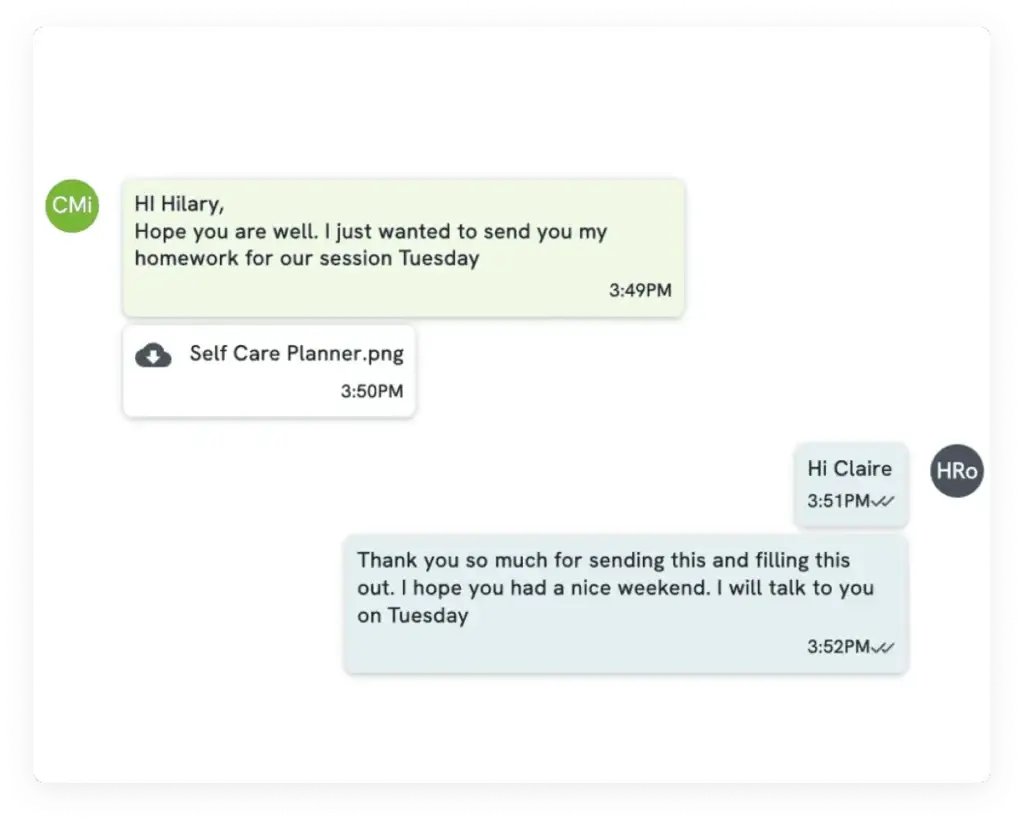
Secure messaging that supports skill use
When messaging is part of the treatment plan, it can help clients share assigned work, clarify practice, and reconnect the next appointment to what happened in daily life.
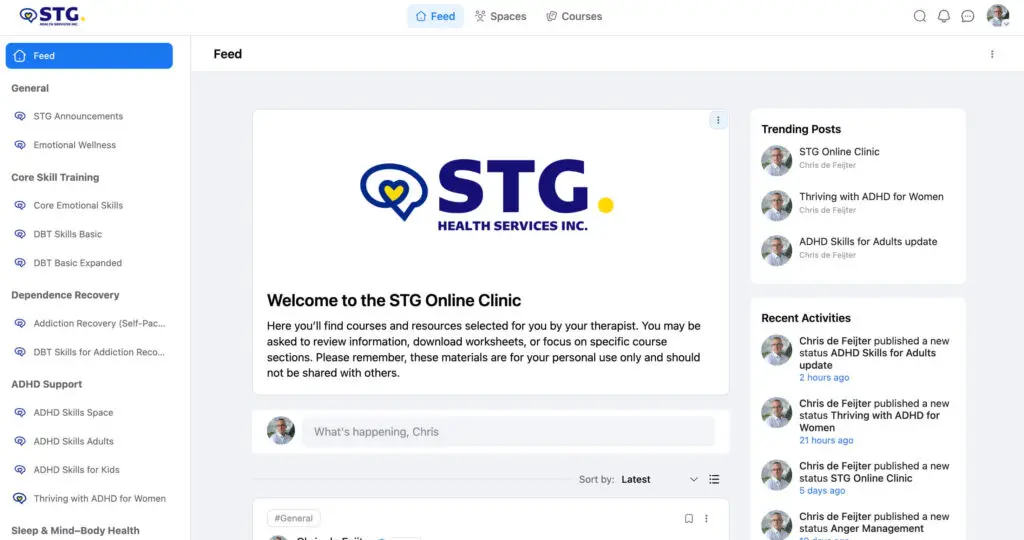
A private learning environment
Selected clients receive structured learning materials, worksheets, reminders, and program resources through the STG Online Clinic rather than relying on memory alone.
Know the practical details before treatment begins
Comprehensive DBT typically combines individual and group fees. Current individual sessions range from $140–$225 and group sessions from $60–$90. Funding and reimbursement depend on eligibility and approval.
A clear pathway—without guessing where to start
You do not need to know the diagnosis, program, or clinician before reaching out.
01 — Secure intake
02 — Clinical fit review
03 — Clear recommendation
04 — Begin with a plan
What people usually want to know before starting
Is any therapy that uses DBT skills “comprehensive DBT”?
No. Comprehensive DBT refers to a coordinated treatment system with distinct modes, a hierarchy, behavioural methods, consultation, and structured skills training.
Do I have to participate in both individual therapy and skills training?
In the comprehensive model, both are core components. A different DBT-informed pathway may be recommended when the full model is not indicated.
What is between-session coaching for?
It helps apply skills in the environment before ineffective behaviour occurs. It is not a replacement for the weekly individual session.
Why does the therapist need a consultation team?
Comprehensive DBT asks therapists to maintain a demanding balance of acceptance, change, strategy, boundaries, and risk management. Consultation supports adherence and effective care.
Can my physician be involved?
With consent, care can be coordinated when medical, medication, or diagnostic information is relevant.
You may also be interested in…
DBT Individual Therapy
DBT Skills Training
DBT-PE for PTSD
Start with a clinical fit review—not a guess about the program.
The secure intake gives the clinic enough information to recommend a proportionate and clinically appropriate next step.