DBT SASKATCHEWAN · STG HEALTH
STG Diary Card System
More than a diary.
A connected part of your care.
See how STG connects personalized daily check-ins, practical skills, a guided coach and clinician-reviewed reports—so what happens between appointments can inform the work you do together.
No app download · Set up with your clinician
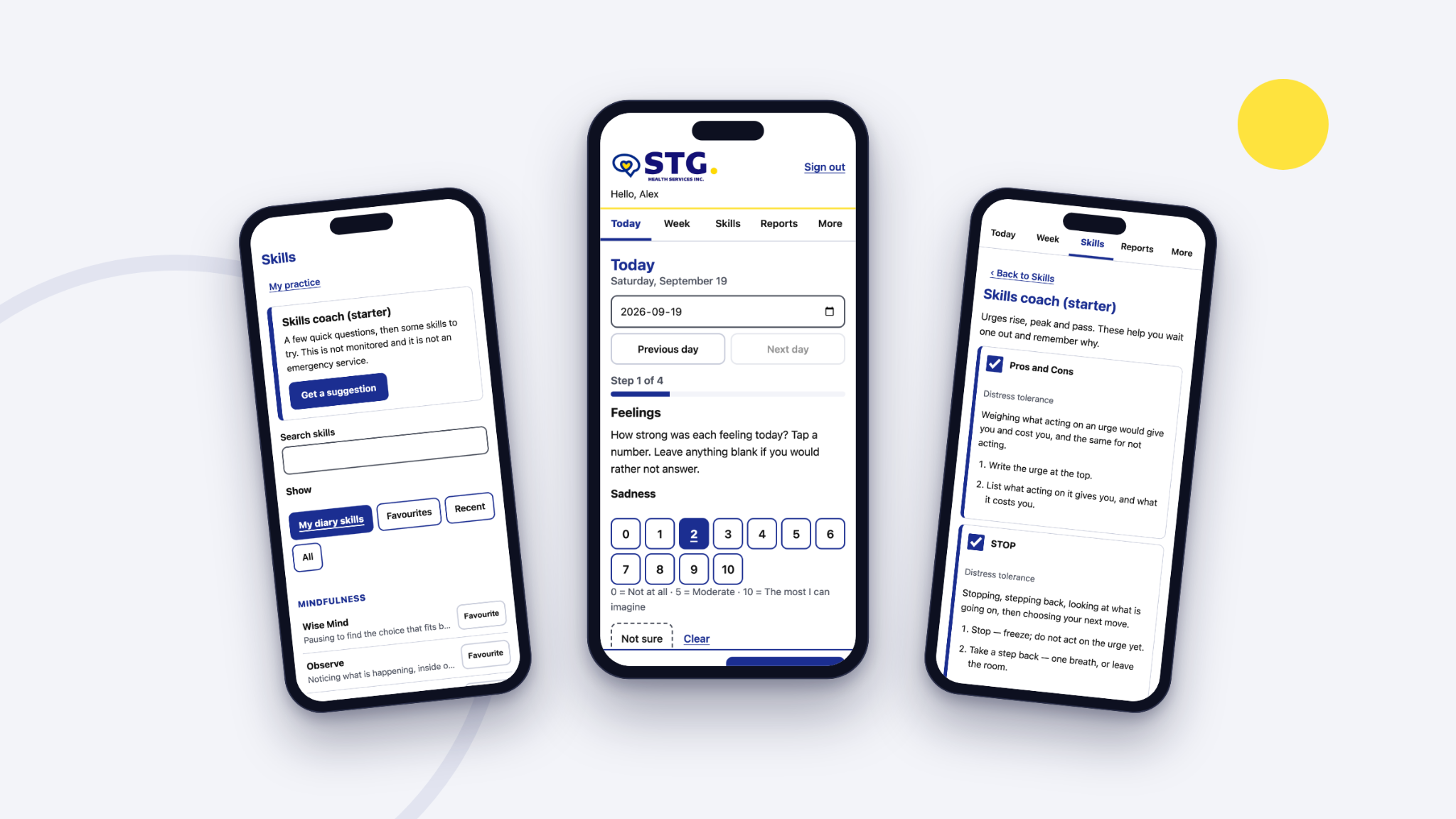
Example screens use fictional demonstration data.
A tool alongside therapy. The diary and skills coach are not monitored in real time. They are not an emergency contact channel.
November cohort planned
Put resources and tracking to work in a live group.
The November 2026 DBT Skills Refresher includes STG Online Clinic resources and STG Track access alongside twelve 90-minute online sessions. For adults with prior core DBT skills training. $70 per session; $840 in group-session fees.
The November cohort is being prepared. Exact dates and enrolment arrangements will be confirmed before you commit.
01 / YOUR DAILY CHECK-IN
Start with what you can notice.
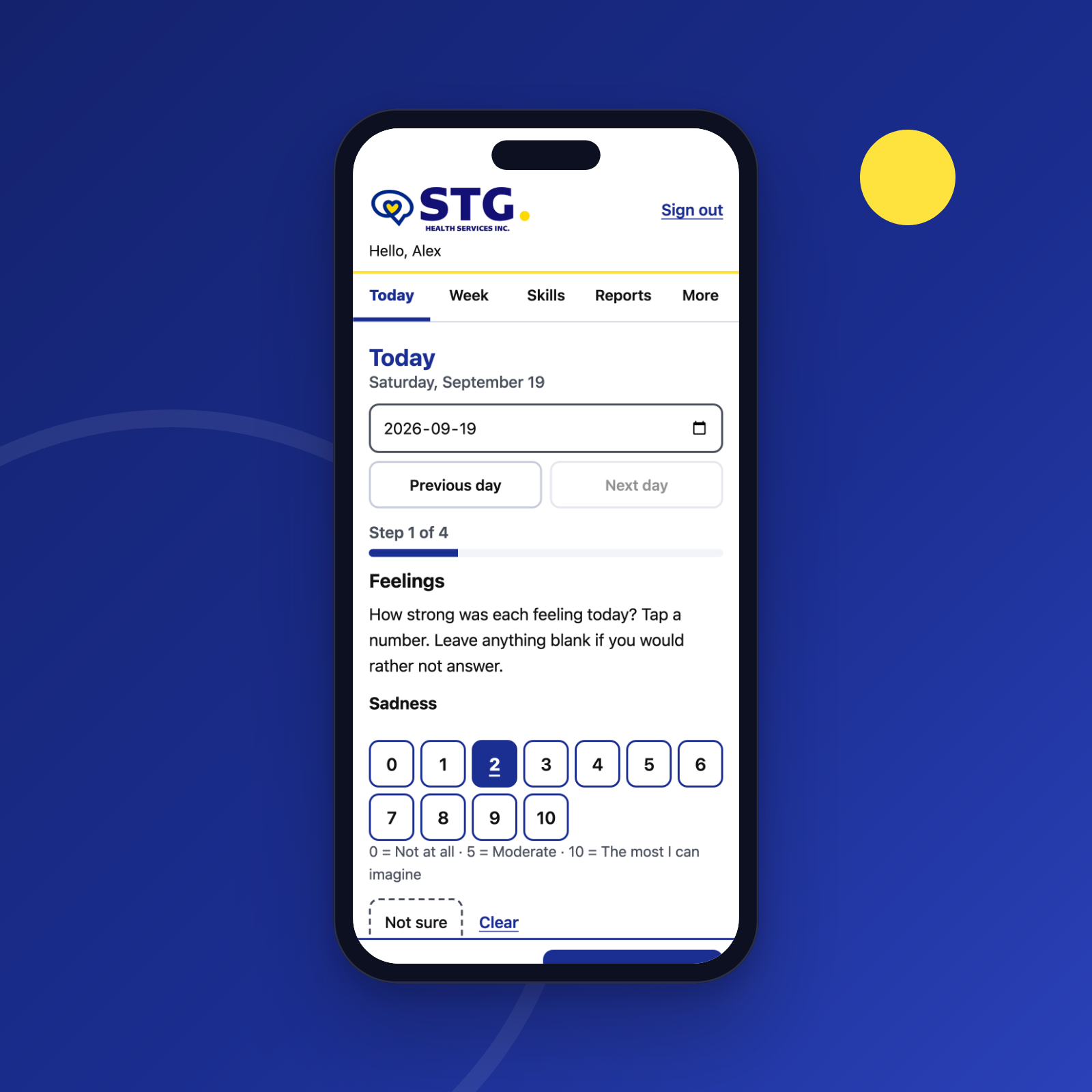
When a week feels like a blur, a few notes can give you somewhere to begin. Rate feelings and urges, record what happened, tick the skills you used, and add a line about your day if you want to.
Your clinician helps shape the diary around your goals. It is designed for brief daily check-ins, with a shorter version for hard days.
You do not have to fill in every box.
Leave an item blank or choose “not sure”. A blank means not answered—never zero. A missed day is something to understand together, not a failure.
02 / SKILLS BETWEEN SESSIONS
Find a skill for the moment you are in.
Browse skills in plain language, follow short steps, save favourites and see the skills on your own diary card first. Choose Practise this now when you want to try one.
Not sure where to start?
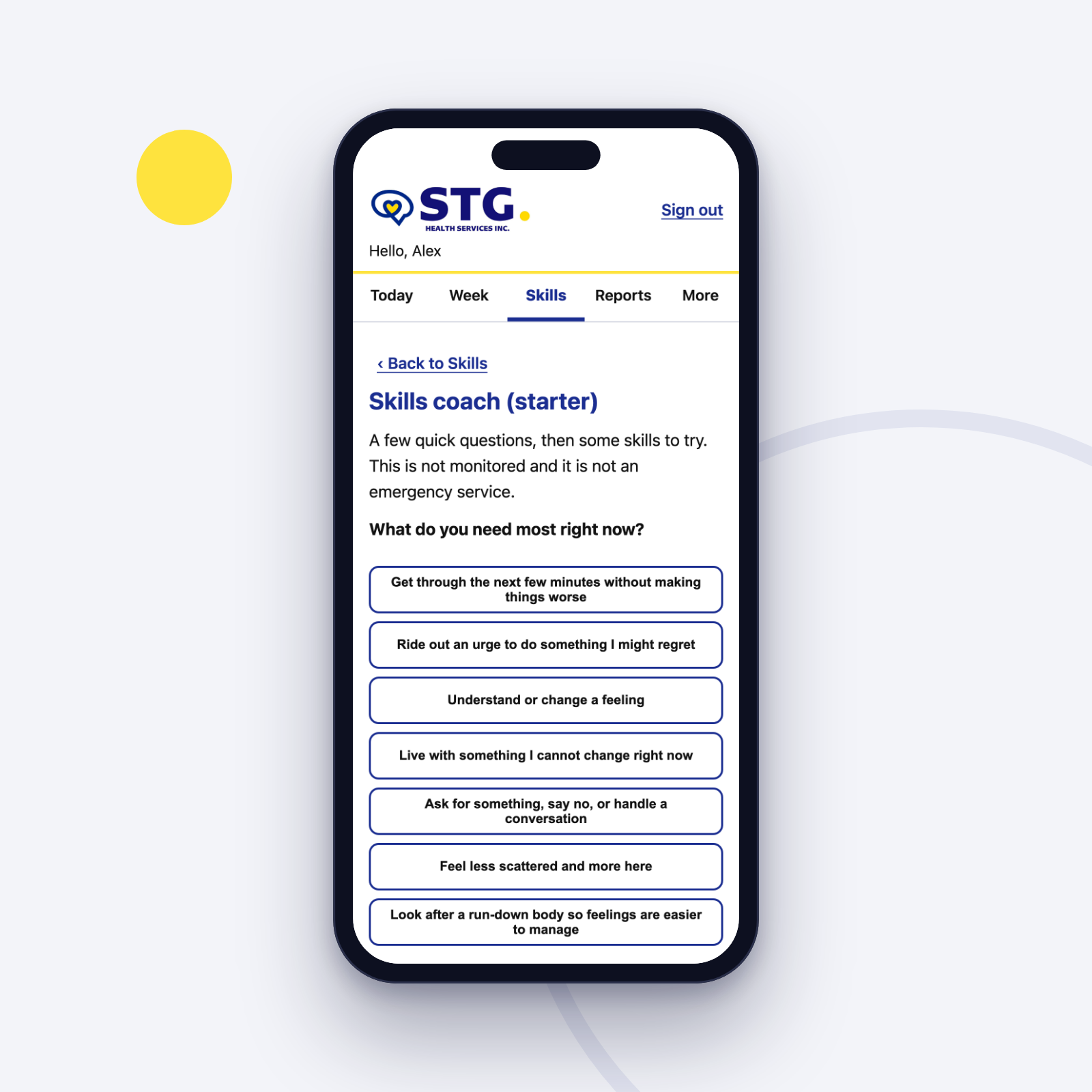
The skills coach asks what you need right now and how strong it feels. It then suggests a few skills and explains why they may fit.
The coach follows a fixed decision guide written by our clinical team. It is not AI, a live chat or a substitute for your clinician.
A choice about your practice records
Skills practice records are shared with your clinician by default. You can mark an individual practice record private when you save it or later. Private practice records are not shown to your clinician or counted in your report. Your diary card remains available to your clinical team.
03 / YOUR CLINICIAN’S VIEW
A fuller picture than memory alone.
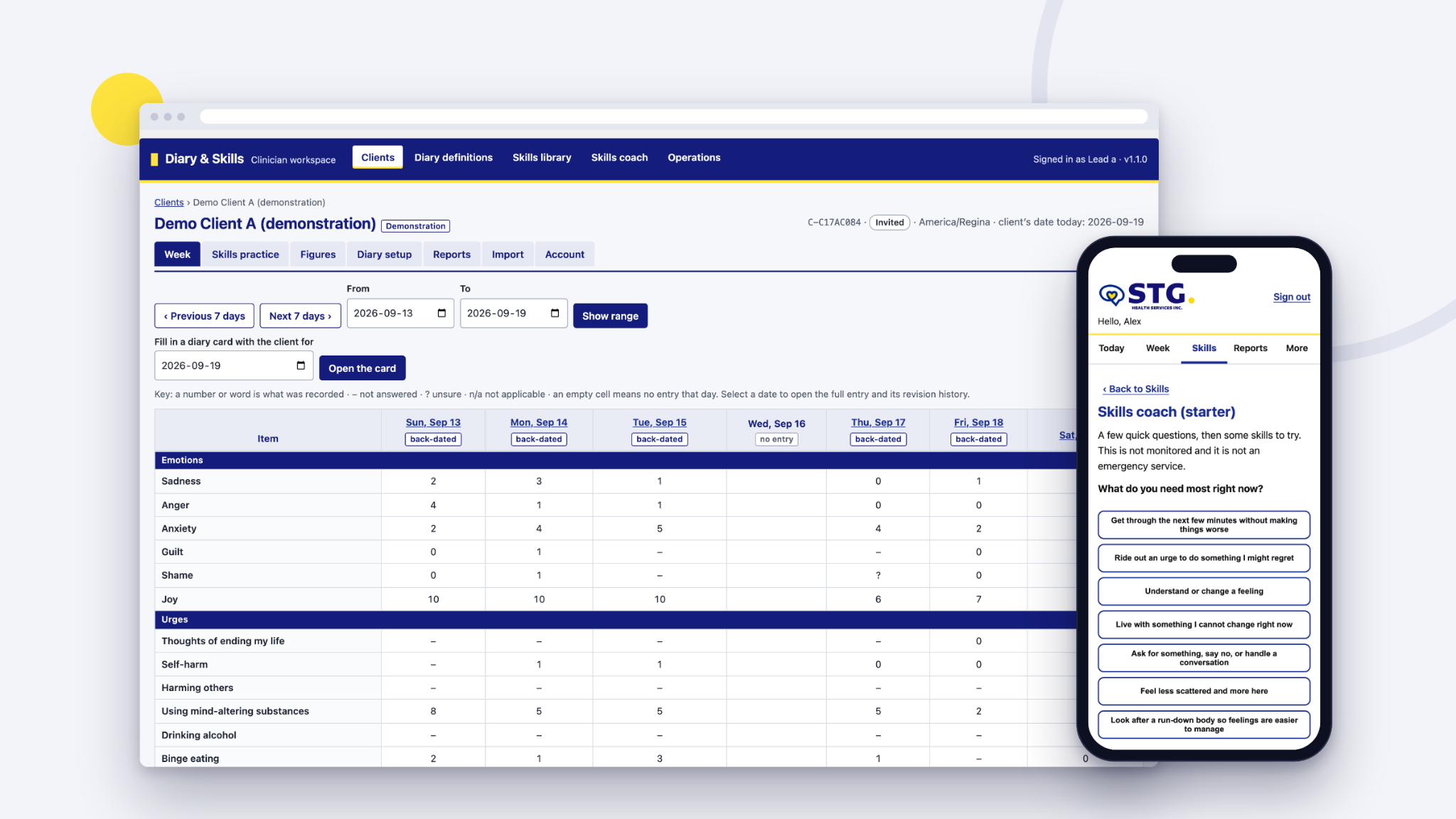
Your clinician can review your diary across the week, look at shared skills practice and return to individual entries. This gives you a concrete starting point for talking about difficult moments, strengths and changes.
The system keeps recorded answers, missing entries and “not sure” responses distinct. You and your clinician check the meaning together, rather than assuming every number tells the whole story.
The purpose: more focused conversations about your life, with your own experience at the centre.
04 / YOUR REPORT + NEXT STEPS
Your entries become a useful conversation.
At agreed review sessions, your clinician prepares a plain-language, three-page report from your recorded entries. Together, you check what the numbers mean, what is still unknown and what to work on next.
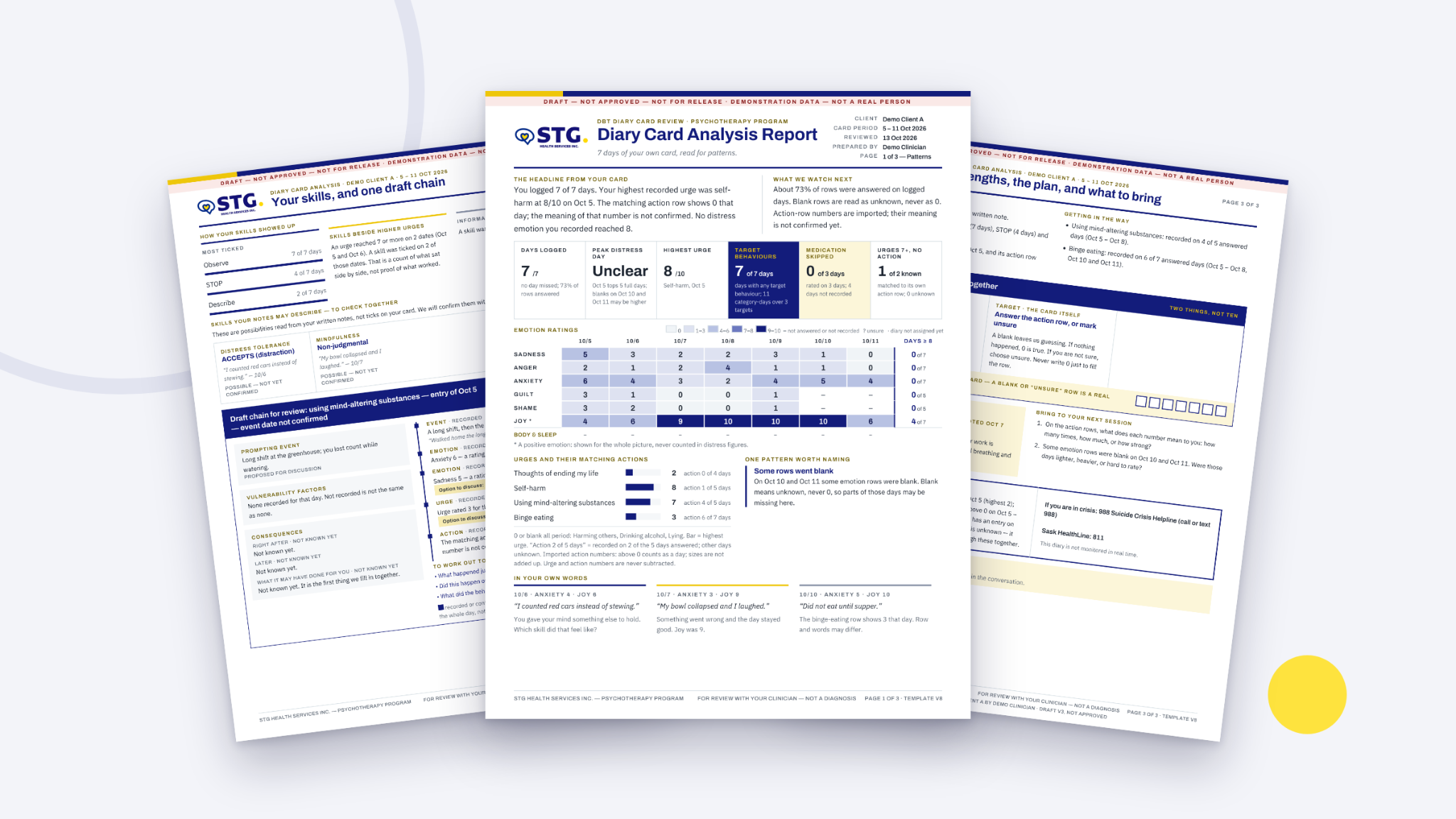
Notice patterns
See recorded feelings, urges and actions across the review period. Missing answers stay visible as missing information.
Recognize skills
Look at skills you recorded and walk through one event, checking the links together instead of guessing.
Choose a next step
Agree on a small, practical plan and what to bring to the next session.
Your clinician reviews the report with you before it is released to you. It supports a clinical conversation; it is not a diagnosis or an automatic assessment.
GETTING STARTED
Set up around you, with your clinician.
01
Agree on your goals
Discuss whether the system fits your care. Your clinician tailors the diary and sends a private invitation link to create your account.
02
Check in and practise
Open the system in your phone’s browser. You can add it to your home screen, record a brief check-in and return to skills as needed.
03
Bring it into sessions
Review your diary together and agree how often to prepare a report. Adjust the focus as you learn what is useful.
PRIVACY + SUPPORT
Know who can see it—and when.
Your diary is available to you and your clinical team. It is stored in encrypted form on STG’s secured website. Staff use multi-factor sign-in, and access to records is logged.
The diary app has no advertising or tracking, and STG does not sell your diary information. Individual skills practice records can be marked private.
If you need help now
Recording an entry does not alert someone to respond immediately. Your clinician usually reviews your diary before or during a session.
For suicide crisis support in Canada, call or text 988. For Saskatchewan health advice, call 811. In an emergency or immediate danger, call 911.
Use the support contacts and safety plan agreed with your care team.
BEFORE YOU BEGIN
A few practical questions.
Do I need to download an app?
No. Use your phone’s browser and, if you like, add the system to your home screen. Your clinician provides your invitation link.
What if I miss a day?
A missed entry is not scored as zero. Start again when you can, and discuss gaps or earlier entries with your clinician.
How do I get access, and what does it cost?
Ask during intake or speak with your current STG clinician. We explain availability, any fees and how the system fits your program before you begin.
Will this replace my appointments?
No. It helps you bring daily experiences and skills practice into treatment. Human coaching, appointment frequency and contact arrangements depend on your agreed care plan.
WHEN YOU ARE READY
You can begin with an imperfect week.
You do not need a complete diary or the right words to ask for support. Tell us what has been difficult, and we will help you explore the next step.